Introduction: Why Luxury Stone Floors Need Professional Restoration
Luxury stone flooring—especially materials like marble, limestone, granite, and travertine—is widely chosen for high-end residential and commercial interiors due to its natural elegance, durability, and timeless aesthetic. However, even the most premium stone surfaces are not immune to wear and deterioration over time. Daily foot traffic, abrasive dirt particles, acidic spills, improper cleaning products, and environmental exposure gradually diminish the original finish of the stone.
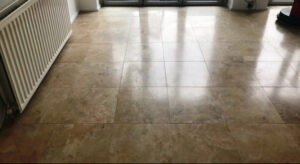
This degradation is often subtle in the beginning. Floors may start losing their natural shine, develop dull patches, or show minor scratches that are not immediately noticeable. Over time, these issues accumulate and significantly affect the overall appearance of the space. In porous stones like travertine, the damage is even more pronounced due to the material’s natural ability to absorb liquids and trap debris within its surface structure.
This is where professional stone restoration becomes essential. Services like
Seaside Stone Restoration specialize in restoring luxury flooring to its original condition using advanced techniques that go far beyond standard cleaning. Unlike surface-level polishing or DIY methods, professional restoration addresses both visible damage and underlying structural issues within the stone.
A major focus area in this field is
travertine tile restoration, which requires specialized handling due to the stone’s softness and porosity. Without expert intervention, improper cleaning or polishing can permanently damage the surface, making restoration more difficult or even impossible later.
Stone restoration experts do not simply “clean” floors—they reconstruct the surface finish, repair imperfections, and apply protective treatments designed to extend the life of the flooring. The result is a surface that not only looks renewed but is also structurally strengthened against future wear.
Understanding how professionals restore luxury stone floors helps property owners make informed decisions about maintenance, preservation, and long-term value protection.
Step 1: Comprehensive Inspection and Stone Condition Assessment
The restoration process begins with a highly detailed inspection phase, which is one of the most critical steps in achieving successful results. Stone restoration experts from companies like
Seaside Stone Restoration carefully analyze the floor to understand its current condition, the type of stone involved, and the extent of damage present.
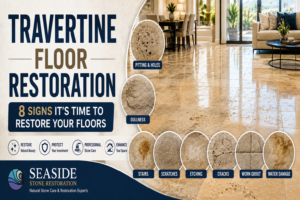
This evaluation includes identifying surface-level issues such as scratches, dullness, and etching, as well as deeper problems like cracks, uneven wear patterns, and grout deterioration. Professionals also assess whether the stone has been previously treated with sealants or coatings, as this directly impacts the restoration approach.
For
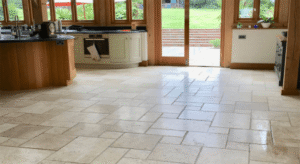
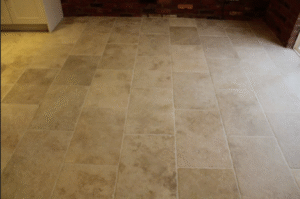
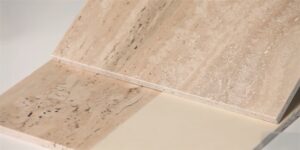
travertine tile restoration, inspection is particularly important due to the stone’s unique characteristics. Travertine naturally contains holes, pits, and voids formed during its geological development. These features can become more pronounced over time as dirt and moisture accumulate. Experts evaluate whether these voids need filling, stabilization, or resurfacing before polishing begins.
Moisture detection is another essential part of the assessment. Since travertine is highly porous, trapped moisture can lead to staining or weakening of the stone structure. Restoration specialists often use diagnostic tools and visual indicators to determine moisture levels beneath the surface.
The inspection phase also helps professionals decide the level of restoration required. Some floors may only need light honing and resealing, while others require full mechanical grinding and resurfacing. This ensures that the restoration process is tailored specifically to the condition of the floor rather than applying a generic treatment.
By the end of this stage, experts create a customized restoration plan that outlines the tools, abrasives, techniques, and finishing methods required. This structured approach ensures precision, prevents unnecessary material removal, and guarantees optimal results for luxury flooring restoration projects.
Step 2: Deep Cleaning and Surface Decontamination
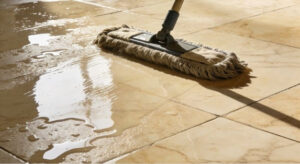
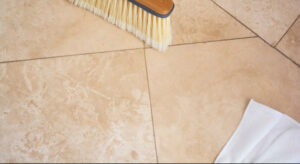
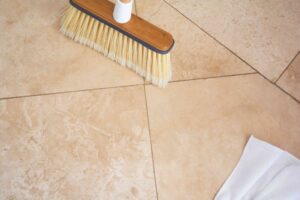
Before any mechanical restoration work begins, the entire stone surface must undergo a thorough deep cleaning process. This step is essential because dirt, oils, wax residues, and chemical contaminants can interfere with restoration equipment and prevent proper resurfacing.
Professional teams such as
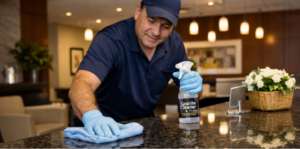
Seaside Stone Restoration use specialized pH-neutral stone cleaners that are specifically designed for natural stone surfaces. These cleaners safely break down embedded dirt without damaging the stone’s mineral composition. Unlike household cleaners, which may contain acidic or alkaline substances, professional-grade solutions ensure the stone remains stable throughout the process.
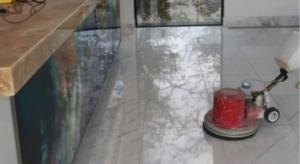
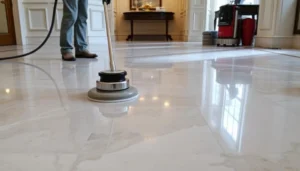
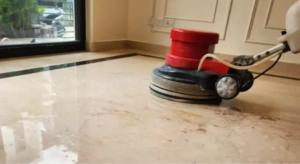
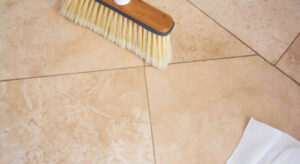
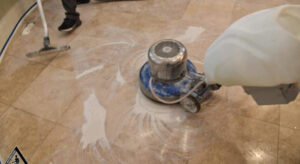
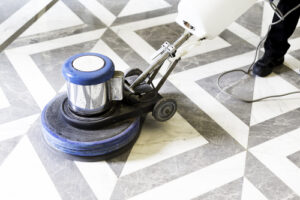
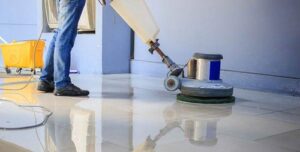
Mechanical scrubbing is often used alongside chemical cleaning. Rotary floor machines equipped with soft-bristle or non-abrasive pads help remove surface buildup and prepare the stone for restoration. In larger commercial environments, low-moisture or steam-based systems may also be used to ensure deep penetration into porous materials.
For
travertine tile restoration, this step is particularly sensitive. Travertine reacts negatively to harsh chemicals, which can cause etching or surface erosion. Therefore, restoration experts carefully control moisture levels and cleaning pressure to avoid damaging the stone.
Grout lines are also cleaned during this stage. Over time, grout can absorb dirt and discoloration, affecting the overall appearance of the flooring. Cleaning grout ensures uniformity in the final restored surface and improves visual consistency.
Once cleaning is complete, the surface is inspected again to ensure all contaminants have been removed. This guarantees that subsequent restoration steps—such as honing and polishing—are performed on a clean, stable foundation. Proper decontamination is crucial for achieving a high-quality, long-lasting restoration result.
Step 3: Honing to Remove Surface Damage and Restore Smoothness
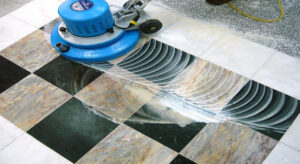
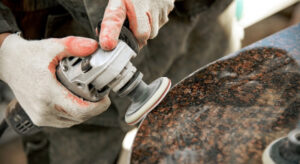
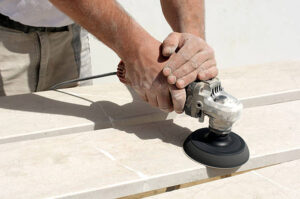
Honing is a core stage in stone restoration that focuses on removing surface imperfections such as scratches, etching, and dullness. This process uses diamond abrasive pads in a controlled progression, gradually refining the surface until it becomes smooth and even.
The process typically begins with coarser abrasives to eliminate deeper damage, followed by progressively finer grits to refine the stone’s texture. The goal is not only to remove visible defects but also to create a uniform surface that can later be polished to the desired finish.
In luxury flooring restoration, honing is especially important because it restores structural uniformity across large surface areas. Without proper honing, uneven light reflection and patchy finishes may occur after polishing.
For
travertine tile restoration, honing plays a particularly critical role. Travertine is softer than many other natural stones, which makes it more susceptible to surface wear. Over time, foot traffic creates uneven patterns that dull the natural appearance of the stone. Honing corrects these inconsistencies and restores a balanced surface profile.
Skilled technicians carefully control pressure, speed, and abrasive selection during this stage. Excessive honing can remove too much material, while insufficient honing may leave defects behind. This balance is essential for maintaining the integrity of luxury stone flooring.
Seaside Stone Restoration emphasizes precision during honing to ensure that the stone retains its natural characteristics while achieving a refreshed, uniform appearance. Once honing is complete, the floor is ready for repair and polishing stages.
Step 4: Repairing Cracks, Filling Voids, and Restoring Surface Integrity
After honing, any structural imperfections in the stone become more visible. This includes cracks, chips, pits, and natural voids—especially common in travertine flooring. Addressing these issues is essential to restore both the appearance and durability of the surface.
In
travertine tile restoration, filling voids is a standard procedure. Technicians use color-matched epoxy or resin fillers that blend seamlessly with the natural stone. These materials are carefully selected to match the tone and texture of the surrounding surface, ensuring repairs are virtually invisible once the process is complete.
Cracks and chips are also stabilized during this stage. Depending on severity, reinforcement techniques may be applied to prevent further spreading. This is especially important in high-traffic areas where continued stress could worsen existing damage.
Once repairs are completed, excess filler material is leveled and smoothed to align with the surrounding surface. This ensures that the floor remains even and ready for polishing.
This stage is critical because untreated damage can compromise the long-term performance of luxury flooring. Proper repair work ensures structural integrity while enhancing visual consistency.
Step 5: Polishing and Achieving the Desired Finish
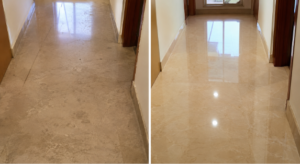
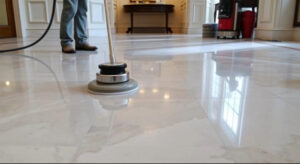
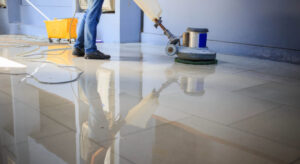
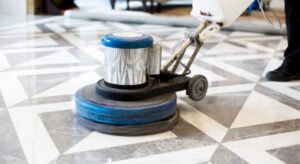
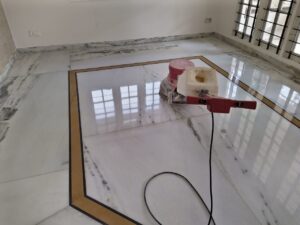
Polishing is the stage where luxury stone floors regain their visual brilliance. Using fine diamond pads and polishing compounds, experts refine the surface to achieve a consistent reflective finish.
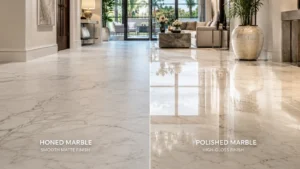
Depending on client preference, the final appearance may range from matte and honed finishes to high-gloss reflective surfaces. Each finish requires a different level of refinement and polishing technique.
In
travertine tile restoration, polishing must be carefully controlled. Travertine’s natural softness means it reacts differently compared to harder stones like granite. Over-polishing can lead to uneven sheen or surface weakening.
Seaside Stone Restoration applies gradual refinement techniques to ensure even light reflection and a natural finish. The result is a restored surface that enhances the elegance of luxury interiors while maintaining stone authenticity.
Step 6: Sealing and Long-Term Protection
Sealing is the final protective stage in stone restoration. Since natural stones are porous, sealing prevents moisture, stains, and dirt from penetrating the surface.
For travertine, penetrating sealers are commonly used because they protect the stone from within while preserving its natural appearance. This step is essential in
travertine tile restoration because it extends the lifespan of the restoration work and reduces maintenance requirements.
Sealing ensures that the restored surface remains durable, stain-resistant, and visually consistent over time.
Conclusion: The Value of Professional Stone Restoration
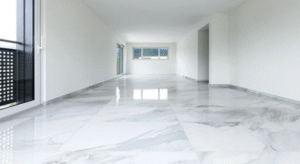
Professional stone restoration is a highly specialized process that transforms worn, damaged flooring into a renewed luxury surface. Through inspection, cleaning, honing, repair, polishing, and sealing, experts restore both beauty and structural integrity.
For delicate surfaces like travertine, professional
travertine tile restoration ensures long-lasting results that DIY methods cannot achieve. With expert care from
Seaside Stone Restoration, luxury floors regain their original elegance and remain protected for years to come.

 +1 760-685-3909

 .
.