+1 760-685-3909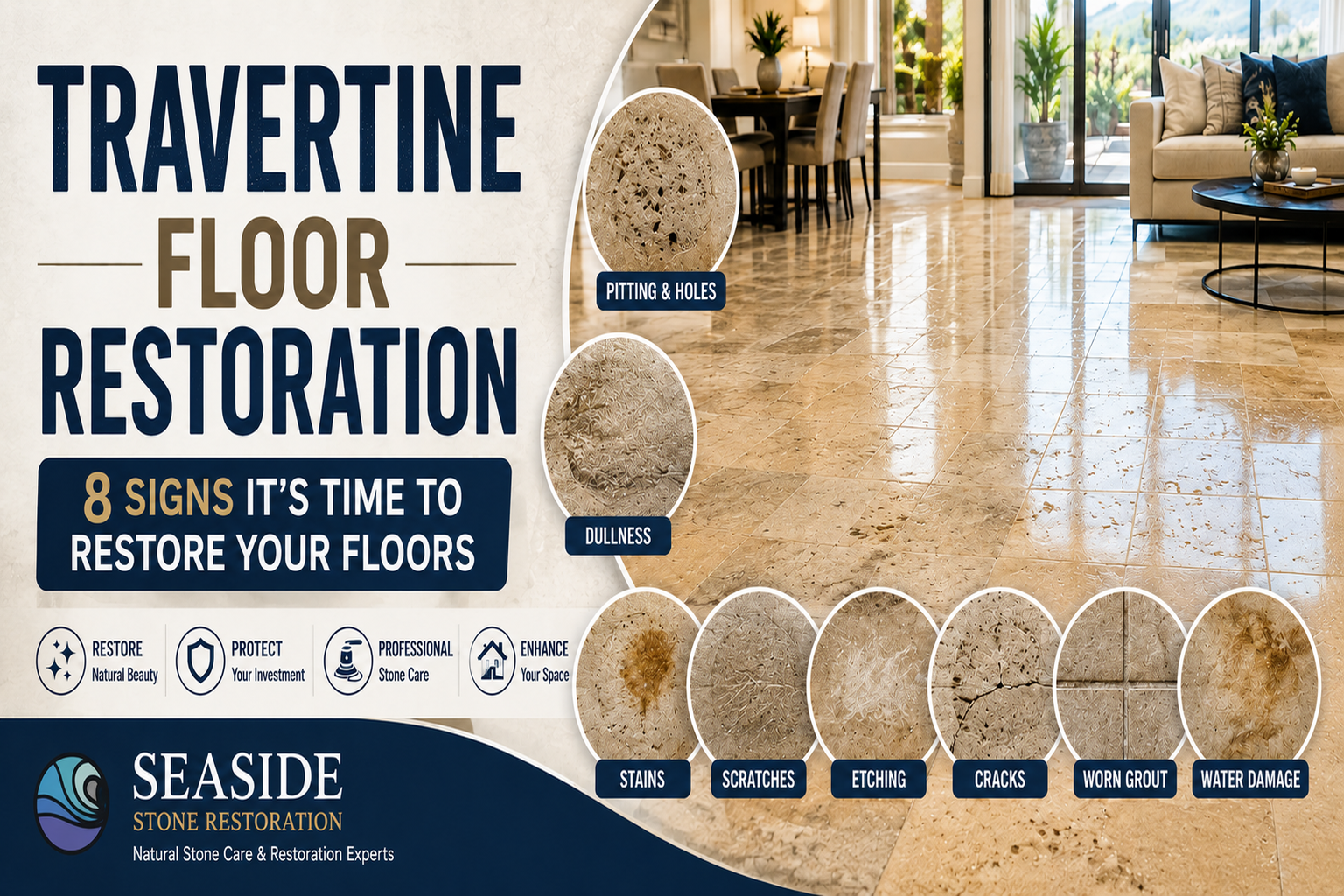

Home/ Blog Details
Travertine floor restoration: 8 signs it’s time to restore your floors
2 September, 2026
Travertine floors add natural beauty and character to homes and commercial properties, but daily traffic, spills, stains, and wear can gradually damage their appearance. Seaside Stone Restoration provides professional travertine floor restoration to address these issues and help extend your floors' life. In this guide, you'll learn eight signs that your travertine may need restoration and when professional service is worth considering in Carlsbad, Oceanside, Encinitas, and Vista.
Quick answer
Travertine floors may need restoration when they develop persistent stains, dullness, scratches, etching, chips, cracks, uneven areas, or difficult-to-remove buildup. Professional restoration goes beyond routine cleaning by assessing the stone, correcting surface imperfections, honing or polishing where appropriate, repairing damaged areas, and applying suitable protection. The right approach depends on the floor’s condition, finish, age, usage, and environment.
What is travertine floor restoration?
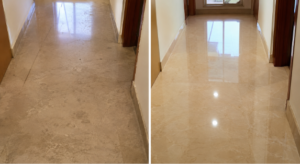
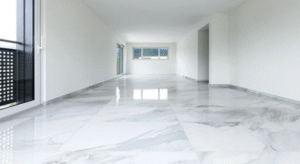
Travertine floor restoration is the professional process of bringing worn, stained, scratched, etched, or damaged travertine surfaces back to a more attractive and functional condition. Depending on the floor, the work may include deep cleaning, stain treatment, repairs, honing, polishing, and sealing. Travertine is a porous natural stone with a distinctive appearance and naturally occurring voids and variations. Because of these characteristics, restoration methods must be selected based on the condition and finish of the individual surface.Professional restoration can be appropriate for:
- Travertine floors and tiles
- Entryways and foyers
- Kitchens and dining areas
- Bathrooms
- Living areas
- Patios and other suitable outdoor surfaces
- Hotel and hospitality spaces
- Restaurant and retail floors
- Office and commercial buildings
Why is travertine floor restoration important?
Restoration is not only about making a floor look better. Addressing surface problems at the right time can help preserve the stone's usability and appearance while reducing the likelihood of more extensive deterioration.Key benefits include:
- Improved appearance: Restoration can reduce visible dullness, stains, scratches, and uneven wear.
- Better surface condition: Damaged or deteriorated areas can be addressed before they become more difficult to manage.
- Extended service life: Proper care can help travertine remain functional and attractive for longer.
- Protection from future problems: Appropriate finishing and sealing can help reduce the effects of moisture and staining.
- Preserved property appeal: Well-maintained natural stone can contribute to the overall appearance of a home or commercial property.
- Potential cost savings: Restoring an existing floor may be more practical than replacing a large area of natural stone.
How does travertine floor restoration work?
Every travertine floor has different needs, so a professional restoration plan should be based on an inspection rather than a one-size-fits-all procedure.1. Initial inspection and assessment
The process begins with examining the floor to identify its overall condition. Professionals look for stains, scratches, etching, holes, cracks, dull areas, uneven surfaces, and signs of previous treatments.2. Identifying the underlying issues
A dull floor may not simply be dirty. It could have surface abrasion, etching, worn finish, or accumulated residue. Identifying the actual cause helps determine which restoration techniques are appropriate.3. Preparing the surface
Furniture and other items are moved or protected as needed, and the work area is prepared. The floor is then treated with products and methods appropriate for natural stone.4. Deep cleaning
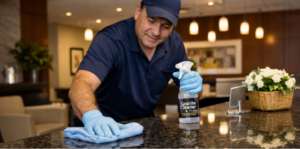
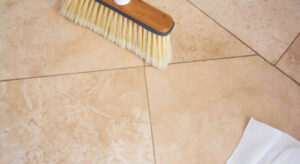
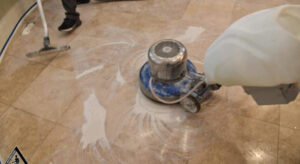
Professional travertine floor cleaning can remove embedded dirt, grime, stains, and residue that routine household cleaning may not fully address. Seaside Stone Restoration states that its travertine process uses non-acidic cleaning solutions designed for natural stone.5. Repairing problem areas
Cracks, chips, holes, and other imperfections may require repair before the surface is honed or polished. Addressing these defects first helps create a more consistent finished surface.6. Honing or polishing
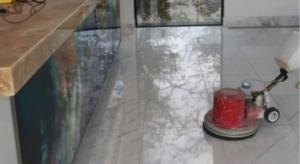
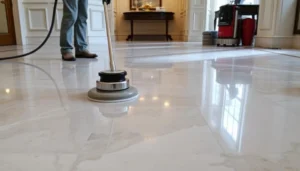
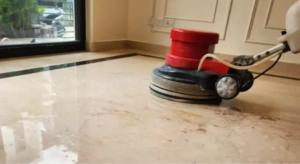
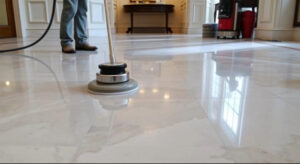
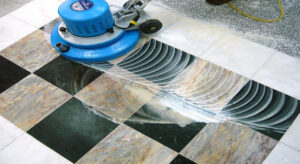
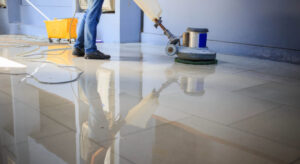
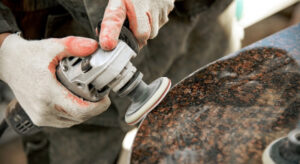
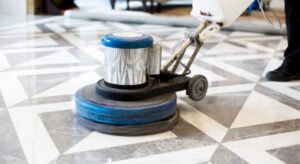
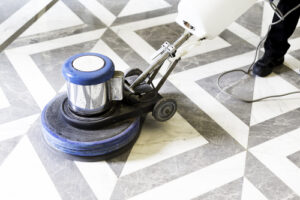
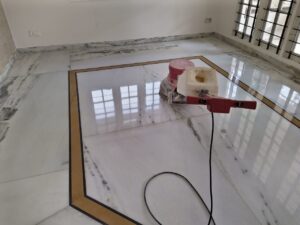
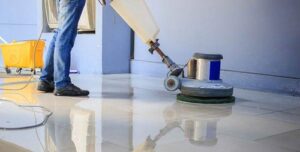
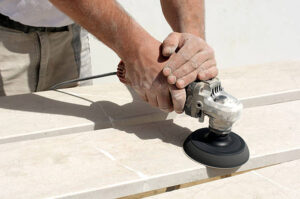
Diamond-impregnated abrasive equipment can be used to address scratches, dullness, and surface imperfections. Depending on the desired appearance and existing finish, the stone may be honed for a softer finish or polished to achieve greater sheen.7. Sealing and final inspection
Where appropriate, a suitable sealer can provide additional protection against moisture and staining. The completed surface is then inspected to ensure the restoration work meets the intended result, and maintenance recommendations can be provided.What should you know before hiring a travertine restoration professional?
Choosing the right professional can make a significant difference because natural stone requires techniques suited to its characteristics.Consider the following before hiring a provider:
- Experience: Look for a company with demonstrated experience restoring natural stone and travertine.
- Technical knowledge: The provider should understand the differences between cleaning, honing, polishing, repair, and sealing.
- Equipment: Professional-grade diamond abrasives and floor equipment can provide greater control than consumer tools.
- Stone condition: The existing finish, damage, porosity, previous treatments, and traffic level should all be considered.
- Property type: Residential floors may have different scheduling and access requirements than restaurants, hotels, offices, or retail properties.
- Scope of work: Ask what treatments are recommended and why each one is necessary.
- Estimate: A professional should be able to assess the project and explain the expected scope before work begins.
- Maintenance advice: Ask how to care for the restored floor and when professional maintenance may be appropriate.
Common problems or mistakes to avoid
Travertine can be damaged by inappropriate cleaning methods and delayed maintenance. Some common mistakes include:Using harsh or acidic products
Travertine is a calcium-based natural stone, so unsuitable acidic products can cause etching and dull spots. Always use products specifically appropriate for natural stone.Treating every stain the same way
Different stains and surface marks may require different treatments. Aggressive scrubbing without identifying the source of the problem can make the situation worse.Trying to polish the floor without proper equipment
DIY polishing can create inconsistent sheen or visible patterns when the wrong abrasive, pressure, or technique is used.Ignoring small chips and cracks
Minor defects can become more noticeable with continued traffic. Having them assessed early may prevent more extensive restoration work later.Waiting until the floor is severely deteriorated
A floor that looks slightly dull today may develop additional scratches, stains, or wear over time. Early assessment can help property owners make informed maintenance decisions.Choosing a provider only because of price
The lowest estimate does not necessarily represent the best value. Experience, equipment, restoration methods, communication, and workmanship should also be considered.Neglecting ongoing maintenance
Even professionally restored travertine needs appropriate routine care. Regular dust and debris removal, suitable cleaning products, prompt spill cleanup, and periodic professional assessment can help preserve the surface.When should you consider travertine floor restoration?
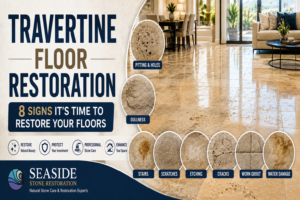
Here are 8 signs it may be time to restore your travertine floors:1. The floor looks dull even after cleaning
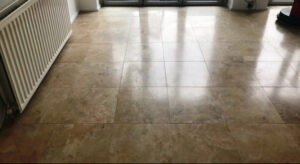
If your travertine still looks flat or lifeless after routine cleaning, the problem may be surface wear rather than dirt. Heavy foot traffic can gradually create micro-abrasions that reduce the stone's natural visual appeal.2. Stains keep coming back or will not disappear
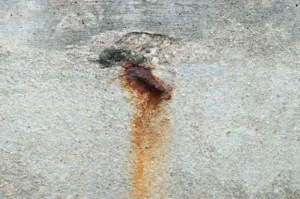
Persistent stains are a common indication that routine cleaning is no longer enough. Seaside Stone Restoration identifies visible stains that remain after regular cleaning as one reason to consider restoration.3. You notice scratches or etch marks
Scratches and etching can develop from foot traffic, furniture movement, spills, or unsuitable cleaning products. Honing and polishing may be appropriate depending on the severity and location of the damage.4. The surface has chips, cracks, or holes
Travertine naturally contains pores and voids, but damaged or enlarged openings, chips, and cracks can affect the appearance and smoothness of the floor. These areas should be assessed and repaired when necessary.5. The floor feels uneven
Uneven tiles, lippage, or deteriorated areas can affect both appearance and usability. Seaside Stone Restoration specifically lists uneven surfaces as a sign that travertine may need professional attention.6. Dirt and buildup are becoming difficult to remove
If grime continues to accumulate despite regular maintenance, professional cleaning may be needed to determine whether residue or embedded contaminants are affecting the surface.7. High-traffic areas look noticeably different
Hallways, entrances, kitchens, lobbies, restaurants, and other heavily used areas can wear faster than low-traffic sections. When certain sections become visibly duller or more scratched than surrounding areas, professional assessment can help determine whether localized or broader restoration is appropriate.8. Your travertine floor is aging and requires increasingly frequent maintenance
If you repeatedly clean, treat, or maintain the same problems without achieving lasting improvement, the floor may need more comprehensive restoration. Addressing the underlying surface condition can be more effective than repeatedly treating symptoms. These signs can occur in homes, offices, restaurants, hotels, retail properties, and other commercial buildings. Seaside Stone Restoration serves both residential and commercial properties and lists Carlsbad, Vista, Encinitas, and Oceanside among its service areas.Why choose Seaside Stone Restoration for travertine restoration?
Choosing the right company for travertine restoration can make a significant difference in the appearance and long-term condition of your floors. Seaside Stone Restoration provides professional stone restoration services for residential and commercial properties in Carlsbad, Oceanside, Encinitas, and Vista. With experience working with travertine and other natural stone surfaces, the team uses appropriate techniques and specialized equipment to address different types of wear and damage. Services can include deep cleaning, honing, polishing, sealing, and repairs based on the condition of the stone.Key benefits of choosing Seaside Stone Restoration include:
- Experienced professionals: Skilled technicians understand the unique characteristics of travertine.
- Specialized equipment: Professional equipment helps achieve consistent and precise results.
- Proper techniques: Restoration methods are selected based on the stone's condition and desired finish.
- Attention to detail: Every area, including edges, corners, and worn sections, receives careful attention.
- Customized solutions: Services are tailored to the specific needs of each residential or commercial property.
- Quality workmanship: A detailed approach helps restore the appearance and functionality of worn travertine.
- Maintenance guidance: Customers receive practical recommendations to help maintain their restored floors.
Conclusion
Travertine can remain a beautiful and durable flooring material, but everyday traffic, spills, scratches, stains, moisture, and aging can gradually affect its appearance and condition. Persistent dullness, staining, etching, cracks, chips, uneven areas, and difficult buildup are all reasons to consider professional assessment. Timely travertine floor restoration can address existing problems, improve the surface, and support long-term use. Seaside Stone Restoration provides professional travertine restoration for homeowners and commercial property owners in Carlsbad, Oceanside, Encinitas, and Vista, using appropriate techniques for each floor's condition. Contact Seaside Stone Restoration today for expert travertine floor restoration and a free estimate!Frequently asked questions
1. How much does travertine floor restoration cost?
Cost depends on the floor size, condition, damage, and work required. Request a professional estimate for accurate pricing.2. How long does travertine floor restoration take?
The timeframe depends on the floor size, condition, and restoration work required.3. Can travertine floor restoration be done on residential and commercial properties?
Yes. It can be performed in homes, offices, restaurants, hotels, retail spaces, and other commercial properties.4. How often should travertine floor restoration be performed?
It depends on foot traffic, stone condition, maintenance, and overall wear. High-traffic floors may need attention more often.5. Why should I hire a professional for travertine floor restoration?
Professionals use specialized equipment, proper techniques, and stone-specific treatments to achieve safe, consistent, and lasting results.- granite restoration
- Marble Cleaning
- Stone Restoration
- Travertine Discolouration
- travertine floor

 .
.