Introduction
Marble is one of the most elegant and timeless flooring materials you can have in your home. Its natural beauty, unique veining, and luxurious appearance make it a favorite choice for homeowners throughout
Carlsbad, Oceanside, Encinitas, Vista, and San Diego. However, over time, daily foot traffic, spills, furniture movement, and improper cleaning methods can leave marble looking dull, scratched, or etched.
When this happens, many homeowners begin researching solutions and quickly encounter two terms:
marble polishing and
marble honing.
Although these processes are often mentioned together, they are not the same. In fact, understanding the difference is one of the most important steps in restoring your marble floors correctly. Choosing the wrong process can leave you disappointed with the results or even shorten the life of your stone.
In this guide, we'll explain what marble polishing and marble honing actually are, how each process works, when each one is recommended, and how professionals determine the right solution for your floors.
By the end, you'll know exactly which option is best for your marble surfaces and why professional restoration delivers results that DIY methods simply can't match.
Quick Comparison: Marble Honing vs. Marble Polishing
| Feature |
Marble Honing |
Marble Polishing |
| Purpose |
Removes scratches, etching, and surface damage |
Restores shine and gloss |
| Finish |
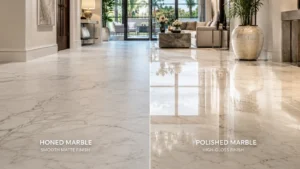
Smooth, matte or satin |
High-gloss, reflective |
| Removes Etch Marks |
✅ Yes |
Only after honing |
| Removes Scratches |
✅ Yes |
Minor imperfections only |
| Best For |
Damaged or worn marble |
Marble in good condition needing shine |
| Slip Resistance |
Higher |
Slightly lower when wet |
| Typical Process Order |
First |
Second (if a glossy finish is desired) |
What Is Marble Honing?

Many homeowners assume honing is simply another word for polishing, but it's actually a completely different stage of marble restoration.
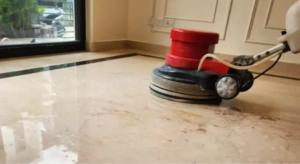
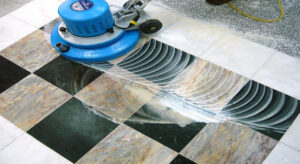
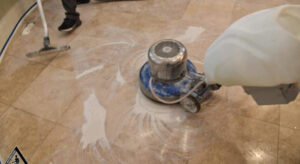
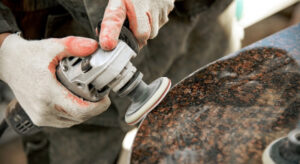
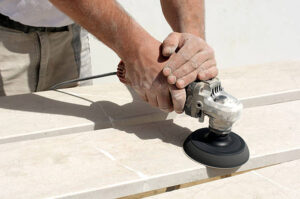
Marble honing is the process of using industrial diamond abrasives to gently remove a microscopic layer from the stone's surface. This eliminates scratches, etch marks, water stains, minor lippage, and other imperfections while creating a smooth, even finish.
Think of honing as resetting the surface of the marble.
Rather than covering damage, honing physically removes the damaged layer, exposing fresh, undamaged stone beneath.
Professional stone restoration technicians use progressively finer diamond abrasives until the surface becomes uniformly smooth. Depending on the desired appearance, the process may stop here, leaving the marble with a beautiful matte or satin finish, or continue to polishing for a glossy result.
What Problems Does Honing Fix?
Marble honing is particularly effective for correcting:
- Acid etching from lemon juice, vinegar, or wine
- Surface scratches caused by sand or furniture
- Dull traffic patterns
- Uneven wear
- Minor water stains
- Light lippage between tiles
- Surface imperfections from years of use
These issues are common in kitchens, bathrooms, entryways, and living areas where marble receives frequent use.
Why Marble Develops Etch Marks
One of the biggest misconceptions homeowners have is confusing
etching with
staining.
They're not the same.
A stain occurs when a substance penetrates the stone and changes its color.
An etch mark is physical damage to the marble's surface caused by acidic substances reacting with the calcium carbonate found in natural stone.
Common culprits include:
- Lemon juice
- Vinegar
- Wine
- Coffee
- Soda
- Tomato sauce
- Bathroom cleaners
- Toilet bowl cleaners
Even a small spill that's left sitting for a few minutes can leave behind dull, cloudy spots that regular cleaning cannot remove.
Because etching changes the surface itself, no cleaner or polish can erase it. The damaged layer must be professionally honed away before the marble can regain its original appearance.
Benefits of a Honed Marble Finish
Some homeowners intentionally choose a honed finish rather than a polished one. Why? Because a honed finish offers several practical advantages.
1. Better Scratch Concealment
The matte appearance hides everyday scratches much better than highly polished marble.
This makes it an excellent choice for busy households with children or pets.
2. Reduced Glare
Honed marble reflects less light, creating a softer, more contemporary look that complements many modern interior designs.
3. Improved Slip Resistance
Although no stone is completely slip-proof, honed marble generally provides more traction than a high-gloss polished surface, making it popular for bathrooms, laundry rooms, and pool areas.
4. Easier Everyday Maintenance
Dust, footprints, and small imperfections are less noticeable on honed marble, reducing the need for frequent cleaning to maintain an attractive appearance.
What Is Marble Polishing?
While honing repairs the surface,
marble polishing is all about enhancing its appearance.
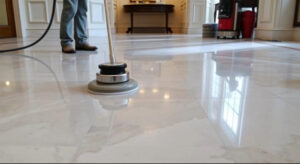
Polishing is the process of refining the honed marble until it develops a smooth, reflective finish that highlights the stone's natural colors and veining.
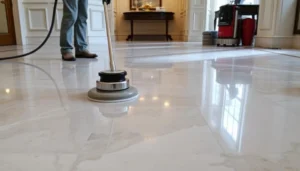
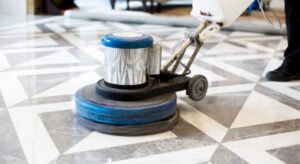
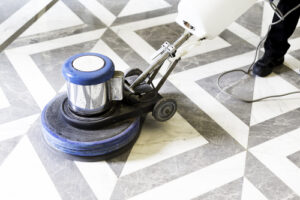
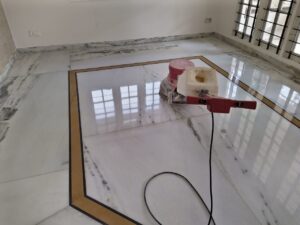
Using specialized polishing compounds, diamond abrasives, and professional equipment, technicians gradually increase the surface's clarity and reflectivity until the marble achieves its signature mirror-like shine.
Unlike waxes or topical coatings that temporarily add gloss, true marble polishing creates a natural shine by refining the stone itself. The result is a finish that looks elegant, lasts longer, and preserves the authentic character of the marble.
This is why professionally polished marble feels smooth, looks brighter, and reflects light so beautifully.
What Does Marble Polishing Improve?
Professional polishing can:
- Restore lost shine
- Enhance natural veining
- Increase light reflection
- Improve the overall appearance of a room
- Create a luxurious, high-end finish
- Help marble look newer without replacement
However, it's important to understand one key point:
Polishing does not remove deep scratches or etch marks on its own. Those imperfections typically need to be addressed through honing first before polishing can produce the best results.
The Science Behind Marble's Shine
Many people think the glossy finish on marble comes from a wax or surface coating.
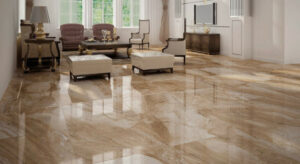
In reality, professionally polished marble gets its shine because the stone's surface is refined to an extremely smooth level. As microscopic imperfections are removed, light reflects more evenly across the surface, creating the brilliant, mirror-like finish associated with luxury marble.
This is also why household polishes or DIY products rarely achieve the same results—they add temporary shine rather than restoring the stone itself.
Marble Polishing vs. Marble Honing: Key Differences
Although marble honing and polishing are often performed together, they serve different purposes. Understanding these differences helps homeowners choose the right solution based on the condition of their marble rather than simply its appearance.
| Feature |
Marble Honing |
Marble Polishing |
| Main Purpose |
Repairs surface damage |
Restores shine and clarity |
| Removes Scratches |
✔ Yes |
✖ No (only very light imperfections) |
| Removes Etching |
✔ Yes |
✖ No |
| Creates Gloss |
Satin or Matte Finish |
High-Gloss Finish |
| Best For |
Worn, scratched, etched marble |
Marble that is already smooth but lacks shine |
| Uses Diamond Abrasives |
✔ Yes |
✔ Yes (finer stages) |
| Final Appearance |
Soft, natural finish |
Reflective, mirror-like finish |
The easiest way to remember the difference is:
Honing restores the surface. Polishing restores the shine.
Which Process Does Your Marble Floor Need?
The right treatment depends entirely on the current condition of your marble.
Choose Marble Honing If...
Your floors have:
- Dull traffic lanes
- Surface scratches
- Acid etch marks
- Water spots
- Minor lippage
- Uneven wear
- Cloudy patches that won't clean away
These are physical imperfections in the stone, so simply polishing won't remove them.
Choose Marble Polishing If...
Your marble:
- Is smooth but lacks shine
- Looks slightly faded
- Has no noticeable scratches
- Has already been honed
- Needs its reflective finish restored
Polishing enhances the stone's beauty but isn't designed to repair damage.
When Do You Need Both?
In most professional restoration projects, homeowners actually benefit from
both services.
A typical restoration process follows this sequence:
- Inspect the marble.
- Hone away scratches, etching, and wear.
- Polish the newly restored surface.
- Apply a high-quality penetrating sealer (if appropriate).
This approach produces a floor that is both beautiful and structurally restored—not just temporarily improved.
Why DIY Marble Restoration Often Falls Short
The internet is full of DIY videos promising to restore marble with polishing powders, household cleaners, or store-bought kits. While these products may offer temporary cosmetic improvements, they rarely address the underlying problem.
Common DIY mistakes include:
- Using acidic cleaners like vinegar or lemon-based products.
- Scrubbing with abrasive pads that leave additional scratches.
- Applying waxes that create uneven buildup.
- Using polishing powders without correcting surface damage first.
- Renting equipment without understanding the correct abrasive sequence.
In some cases, these methods can make the damage more noticeable or create an inconsistent finish that's more difficult—and more expensive—to correct professionally.
Natural marble is a premium material, and restoring it properly requires specialized equipment, experience, and an understanding of how different stone types respond to honing and polishing.
How Professionals Decide Between Honing and Polishing
Every marble floor is unique. Before any restoration begins, experienced technicians evaluate several factors, including:
- Type of marble
- Age of the installation
- Amount of foot traffic
- Presence of scratches or etching
- Existing finish (honed or polished)
- Previous restoration work
- Desired appearance
Rather than applying the same process to every floor, professionals customize the restoration based on the stone's condition and the homeowner's goals.
This tailored approach helps achieve long-lasting results while preserving the integrity of the marble.
Marble Care Tips After Restoration
Whether your marble has been honed, polished, or both, proper maintenance plays a significant role in preserving its appearance.
Use a pH-Neutral Stone Cleaner
Avoid acidic or alkaline cleaners, as they can dull the finish or damage the stone over time.
Wipe Up Spills Promptly
Marble is naturally porous, and acidic liquids such as wine, citrus juice, coffee, and vinegar can etch the surface if left unattended.
Place Mats at Entryways
Dirt and sand tracked in from outside act like sandpaper underfoot, gradually scratching the marble surface.
Use Felt Pads Under Furniture
Moving chairs or tables directly across marble can leave scratches that require professional honing to remove.
Reseal When Needed
While sealing doesn't prevent scratches or etching, it helps reduce staining by slowing the absorption of liquids. The frequency of resealing depends on the type of marble, the level of use, and the products used during installation or previous restoration.
Coastal Homes Require Extra Attention
Homes in coastal communities such as
Carlsbad, Oceanside, Encinitas, Vista, and San Diego often experience conditions that can affect natural stone over time.
Fine sand brought in from the beach can scratch polished marble, while increased humidity may contribute to faster buildup of residue in kitchens and bathrooms. Regular maintenance and prompt cleaning can help protect your investment, and periodic professional restoration keeps marble looking its best for years to come.
Frequently Asked Questions
Does honing remove scratches from marble?
Yes. Honing is specifically designed to remove surface scratches, etch marks, and minor imperfections by removing a very thin layer of the stone.
Can polishing remove etch marks?
In most cases, no. Etch marks are surface damage caused by acids and usually need to be removed through honing before polishing can restore the shine.
Is honed marble harder to maintain?
Not necessarily. Honed marble hides scratches and light wear more effectively than polished marble, though it may show stains if spills are not cleaned promptly.
Which finish is better for busy households?
Many homeowners with children or pets prefer a honed finish because it disguises everyday wear better than a highly polished surface.
How often should marble be professionally restored?
There is no universal schedule. High-traffic floors may benefit from professional restoration every few years, while well-maintained marble in lower-traffic areas can retain its appearance for much longer.
Does sealing replace polishing?
No. Sealing helps protect marble from stains by reducing liquid absorption, but it does not restore shine, remove scratches, or repair etching.
Final Thoughts
Marble is a timeless investment that adds beauty, elegance, and value to any home. However, maintaining that beauty requires understanding the difference between honing and polishing.
If your marble has scratches, dull spots, or etch marks, honing is typically the first step toward restoration. If the surface is already smooth but has lost its brilliance, polishing can bring back the natural shine that makes marble so striking.
In many cases, the best results come from combining both processes as part of a professional restoration plan. An experienced stone restoration specialist can assess the condition of your floors and recommend the treatment that preserves the stone while achieving the finish you want.
If your marble floors have lost their shine or show signs of wear, professional restoration can make a remarkable difference. Whether you prefer the understated elegance of a honed finish or the luxurious reflection of polished marble, choosing the right restoration process helps protect your investment and extend the life of your natural stone.
If you're in
Carlsbad, Oceanside, Encinitas, Vista, or the greater San Diego area, Seaside Stone Restoration provides professional marble honing, polishing, and restoration services tailored to the unique needs of your home. Contact our team to schedule an evaluation and discover the best solution for restoring your marble's natural beauty.

 +1 760-685-3909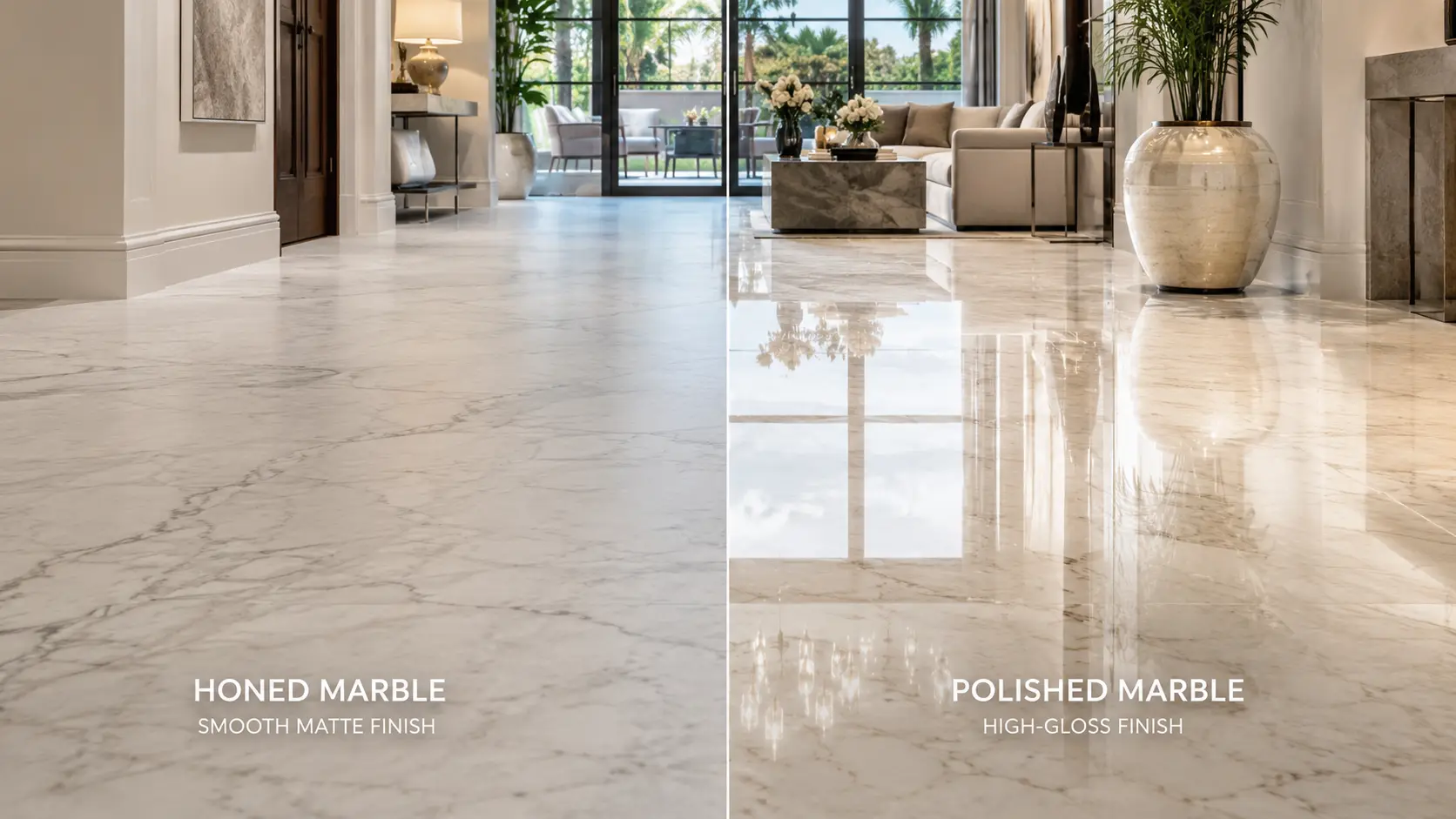


 .
.