+1 760-685-3909

Home/ Blog Details
How to remove stains from travertine floors without damaging the stone?
21 September, 2026
Travertine floors add natural beauty to homes and commercial properties, but their porous surface can absorb spills and develop stains. Using the wrong products can cause etching, scratches, or dullness. This guide explains how to safely remove stains from travertine floors, which mistakes to avoid, and when professional treatment may be necessary.
Quick answerTo remove stains from travertine floors safely, identify the stain, blot fresh spills, and use a pH-neutral cleaner made for natural stone. Avoid vinegar, lemon juice, abrasive powders, and harsh chemicals. Stubborn or deep stains may require professional treatment. If the surface is etched, scratched, or dull, cleaning alone may not be enough.
What causes stains on travertine floors?
Because travertine is porous, liquids and contaminants can penetrate the stone. Common causes include:- Coffee, tea, and juice
- Wine and food spills
- Oil and grease
- Dirt and mud
- Pet accidents
- Soap and cosmetic residue
- Hard-water deposits
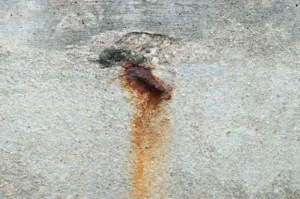
- Rust and outdoor debris
Why is safe stain removal important for travertine?
Travertine can react with acidic products, causing etching and dullness. Safe stain removal helps:- Preserve the stone's appearance
- Reduce surface damage
- Protect the existing finish
- Extend the floor's lifespan
- Reduce the need for extensive restoration
How can you remove common stains from travertine floors?
1. Blot fresh spills
Use a soft cloth or paper towel to absorb spills quickly. Avoid rubbing.2. Remove loose debris
Gently remove dirt, food, or other material before cleaning.3. Use a pH-neutral cleaner
Apply a natural stone cleaner as directed. Use a soft cloth or non-abrasive mop.4. Rinse and dry
Remove residue when appropriate and dry the surface thoroughly.5. Treat stubborn stains carefully
Deep oil, organic, or rust stains may require specialized treatment or a professional poultice.6. Stop if the surface changes
If the stone becomes dull, rough, or discolored, stop treatment and seek professional advice.What should you know before attempting DIY stain removal?
Before treating a stain:- Identify the type of stain.
- Check whether the travertine is honed or polished.
- Test products in a hidden area first.
- Follow product instructions carefully.
- Avoid acidic cleaners and abrasive tools.
- Never mix cleaning chemicals.
- Stop if the stain or surface condition worsens.
Common mistakes to avoid
Using vinegar or lemon juice
These acidic substances can etch travertine.Using abrasive scrubbers
Steel wool, rough brushes, and abrasive powders can scratch or dull the surface.Scrubbing harder
Aggressive scrubbing may damage the finish without removing a deep stain.Leaving spills untreated
Some liquids can penetrate porous stone when left on the surface for too long.Treating etching as a stain
Etching is surface damage caused by a chemical reaction. Cleaning generally will not remove it; honing or polishing may be required.When should you consider professional travertine floor cleaning?
Professional travertine floor cleaning may be appropriate when stains remain after safe cleaning or when the floor has significant buildup or surface changes.Consider professional help if:
- Stains continue to return
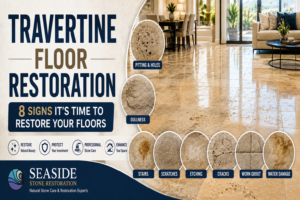
- The surface is dull or etched
- Multiple stains are present
- The floor has heavy buildup
- The stain appears deeply embedded
- Previous DIY treatments caused damage
- You are unsure what caused the discoloration
How does travertine floor restoration address stubborn stains?
When staining occurs alongside scratches, etching, or dullness, travertine floor restoration may be more appropriate than cleaning alone.Depending on the condition, restoration can include:
- Surface inspection
- Deep cleaning
- Stain treatment
- Crack and chip repairs
- Honing
- Polishing
- Sealing
- Maintenance recommendations
What if cleaning does not restore the appearance?
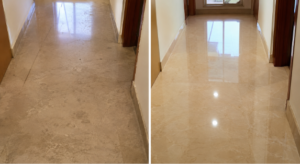
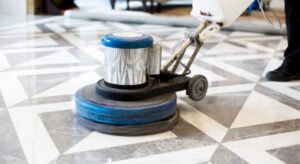
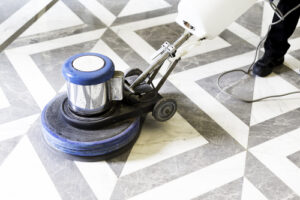
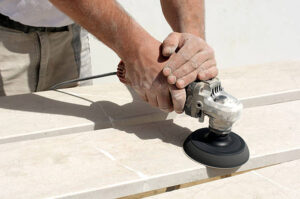
If stains are accompanied by etching, scratches, or worn finishes, professionals may refinish travertine floors using specialized honing and polishing techniques. The appropriate process depends on the stone type, finish, staining, surface wear, and desired appearance. An assessment helps determine whether localized treatment or more extensive refinishing is needed.Professional travertine stain removal in Oceanside, Carlsbad, Encinitas, and Vista
Seaside Stone Restoration provides professional travertine cleaning, stain removal, restoration, polishing, honing, and sealing for residential and commercial properties in Oceanside, Carlsbad, Encinitas, Vista, and nearby areas. Services can help with stained floors in kitchens, bathrooms, entryways, patios, lobbies, restaurants, hotels, offices, and other high-traffic spaces. If you need travertine floor restoration in Carlsbad, travertine stain removal in Oceanside, or professional travertine floor cleaning in Encinitas and Vista, an on-site assessment can determine the right treatment for your stone.Why choose Seaside Stone Restoration?
Seaside Stone Restoration offers professional natural stone services for residential and commercial properties throughout North San Diego County. Its travertine services include cleaning, stain removal, honing, polishing, sealing, and repairs. Professional evaluation is especially useful when stains persist or the floor also has etching, scratches, dullness, or other surface damage.Conclusion
Removing stains from travertine floors requires stone-safe products and proper techniques. Address spills quickly, avoid acidic and abrasive cleaners, and identify the stain type before treatment. When stains are stubborn, or the stone has etching, scratches, or surface wear, professional service may provide a safer solution. Seaside Stone Restoration offers professional travertine cleaning, restoration, polishing, and maintenance services in Oceanside, Carlsbad, Encinitas, Vista, and nearby areas. Need travertine stain removal? Contact Seaside Stone Restoration today for a free estimate!Frequently asked questions
1. What is the safest way to remove stains from travertine floors?
Blot spills quickly and use a pH-neutral cleaner specifically made for natural stone.2. Can vinegar remove stains from travertine?
No. Vinegar is acidic and can etch or dull travertine.3. Can baking soda be used on travertine?
Avoid using it as an abrasive scrub unless a stone professional recommends it.4. Can professionals remove deep travertine stains?
Yes. Depending on the stain, professionals can use specialized stain-treatment methods.5. Can stained travertine floors be restored?
Yes. Restoration can address staining along with etching, scratches, dullness, and other surface problems.6. When should I hire a professional?
Consider professional help when stains persist, DIY treatments fail, or the stone becomes dull, etched, or damaged.- granite restoration
- Marble Cleaning
- Stone Restoration
- Travertine Discolouration
- travertine floor

 .
.