+1 760-685-3909

Home/ Blog Details
Is steam cleaning travertine floors safe for your natural stone?
14 September, 2026
Travertine floors are popular in homes and commercial properties for their natural beauty and timeless look. However, their porous surface requires careful maintenance. Steam cleaning may seem like an effective way to remove dirt and grime, but high heat and moisture can create problems for travertine, especially when the stone has a sealer, filler, or existing damage. This guide explains whether steam cleaning is safe and what methods are better for your natural stone.
Quick answerGenerally, steam cleaning travertine floors is not recommended as a routine cleaning method. High heat and moisture may affect sealers, fillers, grout, and porous areas of the stone. Seaside Stone Restoration recommends stone-safe cleaning approaches, including non-acidic cleaning solutions and controlled moisture. For heavily soiled, stained, or damaged travertine, professional cleaning and restoration can provide a safer solution.
Why does travertine need special cleaning?
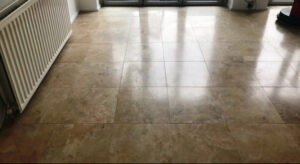
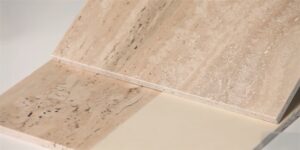
Travertine is a porous natural stone that can absorb moisture, dirt, oils, and other contaminants. It is also sensitive to acidic and abrasive cleaning products.Improper cleaning can contribute to:
- Etching and dullness
- Staining and discoloration
- Sealer deterioration
- Surface scratches
- Moisture-related problems
- Damage to fillers and grout
Is steam cleaning safe for travertine floors?
Steam cleaning is generally not the best choice for travertine. The combination of high temperature and moisture can affect protective sealers and may cause problems in porous or damaged areas. Steam can also loosen dirt without effectively removing it from the stone's pores, holes, or grout lines. This can leave behind moisture and residue that may contribute to further problems. Seaside Stone Restoration specifically advises against steam cleaners for travertine because excessive heat can affect sealants and contribute to surface damage.What are the risks of steam cleaning travertine?
Damage to protective sealers
Heat can weaken or deteriorate some sealers, leaving the stone more vulnerable to staining and moisture.Excess moisture absorption
Because travertine is porous, excessive moisture can penetrate the stone and contribute to discoloration or other moisture-related issues.Problems with fillers and grout
Steam and heat can affect filled holes, joints, and grout, particularly when the installation already has weak or damaged areas.Existing damage may worsen
If the travertine already has cracks, loose areas, worn sealer, or surface deterioration, steam cleaning may not be appropriate.What is a safer way to clean travertine?
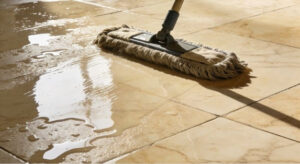
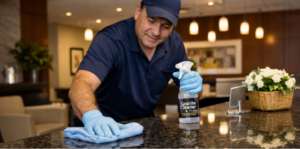
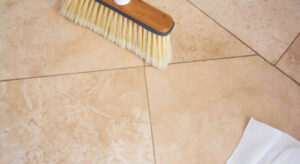
For routine travertine floor cleaning, use a pH-neutral cleaner formulated for natural stone and a soft microfiber mop or non-abrasive cleaning tool.A safer cleaning routine includes:
- Remove loose dirt and grit.
- Use a stone-safe, pH-neutral cleaner.
- Clean with controlled moisture.
- Avoid abrasive pads and brushes.
- Remove excess moisture.
- Allow the floor to dry properly.
What should you avoid when cleaning travertine?
Avoid common household cleaning methods that can damage natural stone, including:- Vinegar and lemon juice
- Acidic bathroom cleaners
- Abrasive powders
- Steel wool
- Harsh scrubbing pads
- Excessive water
- Generic floor cleaners
- Unapproved steam-cleaning methods
When should you consider professional travertine floor restoration?
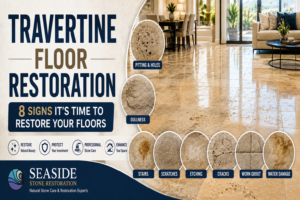
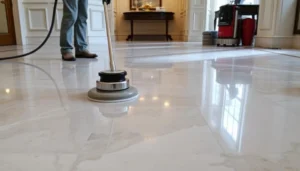
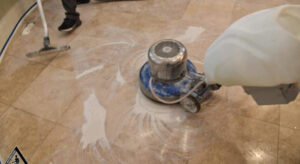
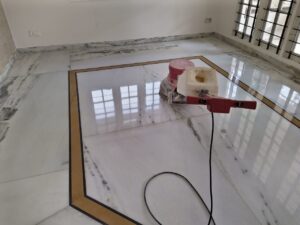
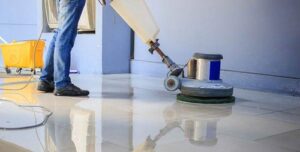
Routine cleaning may not be enough when your travertine has deep stains, scratches, etching, dullness, cracks, or worn finishes.Professional travertine floor restoration may include:
- Deep cleaning
- Stain treatment
- Crack and chip repairs
- Honing
- Polishing
- Sealing
- Surface inspection
What if your travertine has a damaged or worn finish?
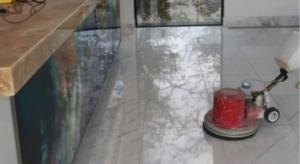
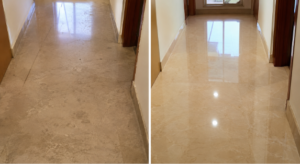
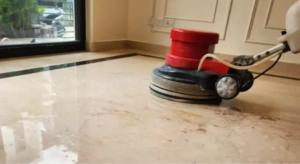
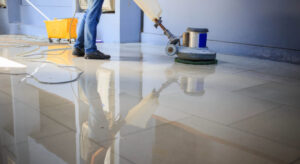
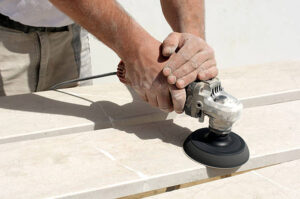
If your floor remains dull or scratched after proper cleaning, professionals may refinish travertine floors using specialized honing and polishing techniques. Refinishing can address surface wear, etching, and scratches that ordinary cleaning cannot remove. The appropriate process depends on the stone's condition, finish, and desired appearance. A professional inspection should be completed before refinishing to determine the safest treatment.How can homeowners and businesses maintain travertine floors?
Both residential and commercial property owners can help protect their travertine by following a consistent maintenance routine.- Clean spills promptly.
- Use pH-neutral stone cleaners.
- Use soft microfiber cleaning tools.
- Avoid acidic and abrasive products.
- Keep excessive moisture off the surface.
- Maintain the protective sealer when needed.
- Schedule professional cleaning or restoration when problems develop.
Why choose Seaside Stone Restoration?
Seaside Stone Restoration provides professional travertine cleaning and restoration for residential and commercial properties in Oceanside, Carlsbad, Encinitas, Vista, and nearby areas. Its travertine services include deep cleaning, polishing, honing, sealing, and repairs. The company uses non-acidic cleaning solutions and specialized equipment designed for natural stone surfaces. Professional evaluation can help determine whether your floor needs routine cleaning, stain treatment, refinishing, or complete restoration.Conclusion
Steam cleaning may work well for some hard flooring materials, but travertine requires a more careful approach. High heat and excess moisture can affect sealers, fillers, grout, and porous areas of the stone. For everyday care, use a pH-neutral natural stone cleaner and controlled moisture. If your floor has stains, etching, scratches, or dullness, professional service may be the safer option. Seaside Stone Restoration provides expert travertine cleaning and restoration for residential and commercial properties throughout Oceanside, Carlsbad, Encinitas, Vista, and nearby areas. Not sure how to safely clean your travertine floor? Contact Seaside Stone Restoration today for a free estimate!Frequently asked questions
1. Can you steam clean travertine floors?
Steam cleaning is generally not recommended for travertine because high heat and moisture may affect the stone and its protective sealer.2. What is the best way to clean travertine floors?
Use a pH-neutral cleaner made for natural stone with a soft microfiber mop and controlled moisture.3. Can steam damage travertine sealer?
Yes. High heat can affect some sealers and may reduce their protective performance.4. Can I use a steam mop on sealed travertine?
It is best to avoid steam mops unless a qualified stone professional confirms that the specific stone, sealer, and installation can safely tolerate the method.5. How often should travertine floors be professionally cleaned?
The frequency depends on traffic, condition, usage, and maintenance. Commercial and high-traffic areas may require more frequent care.6. Can damaged travertine floors be restored?
Yes. Professional restoration can address stains, scratches, etching, dullness, chips, and other surface problems depending on the condition of the stone.- granite restoration
- Marble Cleaning
- Stone Restoration
- Travertine Discolouration
- travertine floor

 .
.