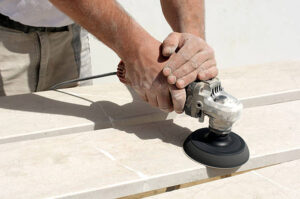
Granite countertops are valued for their durability, natural appearance, and long service life. However, daily use can eventually cause scratches, stains, dullness, etching, or other surface problems. When your countertop starts looking worn, you may wonder whether to restore the existing granite or replace it completely. In many situations, professional restoration can improve the appearance of sound granite without the disruption of a full replacement.
Quick answer
Granite restoration can be a practical option when the countertop is structurally sound but has surface-level problems such as dullness, scratches, stains, or worn areas. Professional restoration may include deep cleaning, honing, polishing, repairs, and sealing. Replacement may be more appropriate when the granite has severe structural damage, extensive cracks, or no longer meets your design needs. A professional inspection can help determine which approach is suitable.
What is granite restoration?
Granite restoration improves an existing granite surface rather than removing and replacing it. Depending on its condition, the process may include cleaning, stain removal, honing, polishing, repairs, and sealing.
Professional granite restoration can be used for countertops, floors, vanities, backsplashes, and other granite surfaces in residential and commercial properties.
Seaside Stone Restoration works with both residential and commercial granite surfaces and identifies problems such as dullness, scratches, stains, uneven areas, and moisture absorption before selecting a restoration process.
When is granite restoration better than replacement?
Restoration may be worth considering when:
- The granite is structurally sound
- The surface has become dull
- Minor scratches or etching are visible
- Stains or discoloration have developed
- The finish has become uneven
- Minor chips or surface damage need attention
- You want to preserve the existing countertop
- You want to avoid unnecessary demolition and installation
Restoration can also preserve the original color, pattern, and character of granite that may be difficult to match with new material.
What are the benefits of restoring a granite countertop?
Restoring an existing countertop can provide several advantages:
- Preserves the original granite: You can keep the material already installed in your home or business.
- Improves appearance: Cleaning, honing, and polishing can refresh a worn surface.
- Addresses multiple problems: A professional project can address stains, scratches, dullness, and other surface issues together.
- Reduces disruption: Restoration generally avoids the demolition associated with removing an existing countertop.
- Supports long-term maintenance: Sealing and proper care can help protect suitable granite surfaces from future staining and moisture.
Seaside Stone Restoration's granite process includes deep cleaning, honing and polishing, followed by sealing to help protect the surface.
When should you replace a granite countertop?
Replacement may be appropriate when the countertop has damage that cannot be effectively restored.
Consider replacement when:
- Severe cracks compromise the countertop
- Large sections are broken or missing
- The underlying support has significant problems
- Damage is extensive across the surface
- The granite no longer fits your design requirements
- Repairs would not provide the desired result
- Restoration costs are close to a complete replacement
A professional assessment can help determine whether the visible damage is cosmetic or structural.
How does granite refinishing work?
Granite refinishing focuses on improving the existing surface rather than installing a new countertop.
A typical professional process may include:
- Inspection: Identify stains, scratches, dullness, cracks, and other problems.
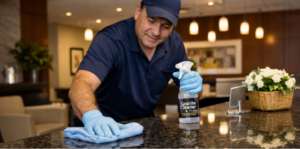
- Deep cleaning: Remove dirt, grease, stains, and surface buildup.
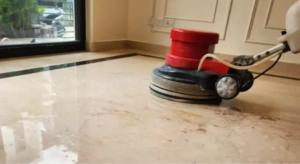
- Honing: Smooth suitable areas with scratches, etching, or uneven wear.
- Polishing: Restore the desired level of shine and improve the stone's appearance.
- Repairs: Address chips, cracks, or other damage as needed.
- Sealing: Apply a suitable protective sealer when required.
- Final inspection: Check the finished surface and provide maintenance recommendations.
The exact process depends on the granite type, finish, condition, and level of damage.
How does granite restoration compare with replacement?
| Factor |
Restoration |
Replacement |
| Existing granite |
Preserved |
Removed |
| Demolition |
Usually limited |
Required |
| Project disruption |
Generally lower |
Generally higher |
| Surface appearance |
Can be significantly improved |
New material installed |
| Material waste |
Usually reduced |
Existing material discarded |
| Best suited for |
Repairable surface problems |
Severe or structural damage |
The appropriate option depends on the condition of the countertop, your project goals, budget, and desired appearance.
What should homeowners and businesses consider before choosing?
Before deciding between restoration and replacement, consider:
- Condition: Determine whether the damage is cosmetic or structural.
- Granite type and finish: Different surfaces may require different treatments.
- Age: Older granite may still have significant useful life.
- Budget: Consider labor, materials, demolition, disposal, and installation costs.
- Design goals: Replacement may make sense if you want a completely different color or style.
- Property use: Commercial countertops may experience heavier use than residential surfaces.
- Maintenance: Consider whether the countertop has been regularly cleaned and sealed.
A professional evaluation can help you understand what your existing granite can realistically achieve through restoration.
What is the role of granite tile polishing?
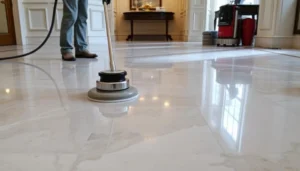
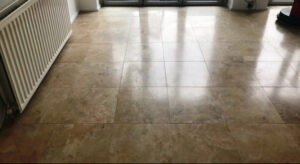
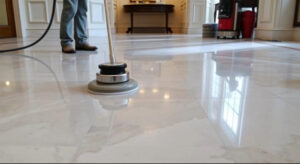
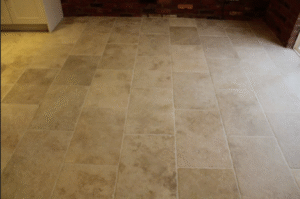
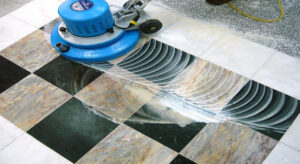
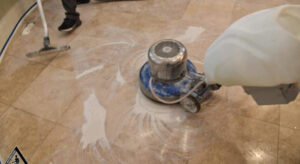
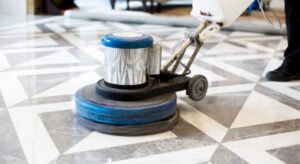
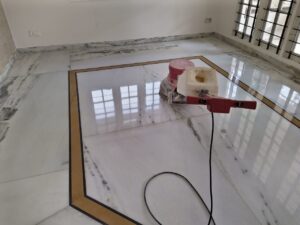
For granite tile floors and other tiled surfaces, granite tile polishing can help improve dullness and surface wear. Polishing is different from simply cleaning because it focuses on refining the stone's surface and restoring an appropriate finish.
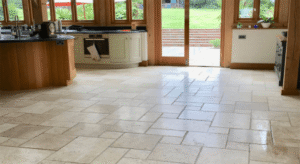
This can be particularly useful in residential kitchens, entryways, bathrooms, commercial lobbies, and other areas where granite tiles experience regular foot traffic.
For commercial properties, heavier traffic may require more intensive restoration methods than residential surfaces. Seaside Stone Restoration notes that commercial granite restoration can involve deep cleaning and grinding when surfaces have experienced significant wear.
Common mistakes to avoid
Replacing the countertop without an inspection
Surface stains or dullness do not automatically mean the granite needs replacement.
Focusing only on the replacement price
Replacement can involve demolition, disposal, new material, fabrication, transportation, and installation.
Using harsh DIY products
Incorrect cleaners or abrasive tools can worsen stains, dullness, scratches, and surface damage.
Ignoring small chips or cracks
Minor damage may become more difficult to address when left untreated.
Choosing inexperienced contractors
Granite requires appropriate equipment and material-specific knowledge. Ask about experience with granite restoration and the specific finish of your countertop.
When should you hire a professional?
Professional restoration is worth considering when your granite has persistent stains, scratches, dullness, moisture rings, or other surface problems.
An experienced technician can inspect the countertop, identify the cause of the damage, and determine whether cleaning, polishing, repairs, sealing, or more extensive restoration is appropriate.
Seaside Stone Restoration provides granite restoration services for residential and commercial properties in Oceanside, Carlsbad, Encinitas, Vista, San Diego, and nearby areas. The company states that it has more than 15 years of experience in stone restoration.
Why choose Seaside Stone Restoration?
Seaside Stone Restoration specializes in natural stone restoration for residential and commercial properties. Its granite services include deep cleaning, honing, polishing, sealing, stain removal, and repairs based on the condition of the surface.
The company serves Oceanside, Carlsbad, Encinitas, Vista, San Diego, and surrounding areas and offers free, no-obligation estimates.
Conclusion
Granite countertops do not always need to be replaced when they become dull, scratched, stained, or worn. If the underlying stone remains structurally sound, professional restoration can improve its appearance through cleaning, repairs, honing, polishing, and sealing. Replacement may be necessary when damage is severe, or the countertop no longer meets your needs. Before making a decision, have the surface professionally evaluated. Seaside Stone Restoration provides granite restoration and refinishing services for residential and commercial properties throughout Oceanside and nearby areas.
Contact Seaside Stone Restoration today to restore your granite stone and get a free estimate!
Frequently asked questions
1. Is granite restoration cheaper than replacement?
It can be, particularly when the existing granite is structurally sound and only requires surface restoration.
2. Can scratched granite countertops be restored?
Yes. Depending on the depth of the scratches, professional honing and polishing may improve the surface.
3. Can stained granite be restored?
Many stains can be treated professionally, although results depend on the type and depth of the stain.
4. How long does granite restoration take?
The timeframe depends on the countertop's size, condition, repairs required, and restoration process.
5. Can granite countertops be refinished?
Yes. Professional refinishing can improve worn, dull, or scratched granite without automatically replacing the countertop.
6. When should granite be replaced instead of restored?
Replacement may be necessary when the countertop has severe structural damage, extensive cracking, or cannot achieve the desired result through restoration.
7. Does granite need to be sealed after restoration?
Depending on the granite and its condition, sealing may be recommended to provide additional protection against stains and moisture.

 +1 760-685-3909


 .
.